Mexican Bush Sage (Salvia leucantha), also known as Amethyst Sage or Velvet Sage, has become one of Japan’s most beloved autumn flowering plants. This remarkable perennial herb from Central America transforms Japanese gardens into spectacular purple havens from late summer through winter. With its distinctive velvety flower spikes and silver-green foliage, Mexican Bush Sage offers gardeners a low-maintenance yet high-impact addition to their autumn landscape.
Native to Mexico and Central America, this hardy perennial arrived in Japan during the late Meiji period and has since adapted beautifully to the Japanese climate. The plant’s scientific name, Salvia leucantha, translates to “white flower,” referring to the small white blooms that emerge from the purple calyces. What most people admire as the “flower” is actually the colorful calyx, which provides the plant’s signature velvet-like texture and long-lasting color.
Japanese gardeners particularly appreciate Mexican Bush Sage for its ability to provide vibrant color when many other flowers are finishing their season. The plant’s robust nature and spectacular autumn display make it an essential component of Japanese fall gardens.
The Charm and Characteristics of Salvia Leucantha
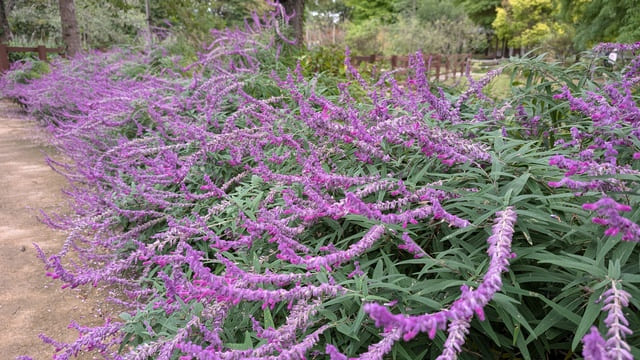
Mexican Bush Sage stands out in the garden with its unique combination of textural beauty and vibrant color. The most striking feature is undoubtedly the flower spikes, which can reach 15-30 cm in length and are covered in soft, felt-like hairs that give the plant its “velvet” nickname.
The flowers themselves are small and typically white or pale pink, but they’re overshadowed by the dramatic purple calyces that surround them. These calyces create the plant’s signature appearance and feel remarkably soft to the touch, often compared to high-quality velvet or felt fabric.
The foliage is equally attractive, featuring elongated oval leaves with a distinctive silver-green color that provides excellent contrast to the purple flower spikes. The leaves are also covered in fine hairs, giving them a soft, almost silvery appearance that adds textural interest even before flowering begins.
In Japan, several cultivars are available to gardeners. The standard purple and white variety remains the most popular, but other options include ‘Midnight’ with deep purple flowers and calyces, ‘Purple Velvet’ with enhanced velvet texture, and white varieties that offer a more subtle garden presence.
The plant typically reaches heights of 100-150 cm in Japanese gardens, with some specimens growing even taller under ideal conditions. The growth habit is naturally spreading, with plants often reaching 80-150 cm in width, making them excellent background plants for autumn borders.
Growing Conditions and Adaptability in Japan
Mexican Bush Sage demonstrates remarkable adaptability to Japanese growing conditions, thriving in most regions from Kanto southward. The plant’s success in Japan stems from its preference for moderate climates and well-drained soils, conditions that match much of Japan’s temperate zones.
The ideal growing location provides full sun to partial shade, with morning sun being particularly important for healthy growth and abundant flowering. In Japan’s humid summers, some afternoon shade can actually benefit the plant by reducing heat stress during the hottest months.
Mexican Bush Sage prefers well-draining soil with moderate fertility. Heavy clay soils should be amended with organic matter and coarse sand to improve drainage, while sandy soils benefit from the addition of compost to increase water retention. The plant tolerates a wide pH range but performs best in slightly alkaline to neutral soils.
Regarding climate adaptability, Mexican Bush Sage shows good cold tolerance in most of Japan. In warmer regions like Kyushu and southern Honshu, plants can survive outdoors year-round with minimal protection. In cooler areas such as northern Honshu and mountainous regions, the above-ground portions may die back in winter, but the plant typically regenerates from underground stems in spring.
The plant’s drought tolerance makes it particularly valuable for water-wise gardening, an increasingly important consideration in Japanese horticulture. Once established, Mexican Bush Sage requires minimal supplemental watering except during extended dry periods.
| Growing Factor | Optimal Conditions | Acceptable Range |
|---|---|---|
| Sunlight | Full sun (6+ hours) | Partial shade (4-6 hours) |
| Soil Type | Well-draining loam | Sandy to clay (amended) |
| pH Level | 6.5-7.5 | 6.0-8.0 |
| Cold Tolerance | -5°C to -8°C | Varies by cultivar |
Planting and Soil Preparation
Successful cultivation of Mexican Bush Sage begins with proper soil preparation and timing. In Japan, the optimal planting time is late spring to early summer (May through June), allowing plants to establish strong root systems before winter.
Site selection requires careful consideration of the plant’s mature size and spreading habit. Choose a location where the plant can expand to its full width without crowding neighboring plants. The site should receive adequate air circulation to prevent fungal issues common in Japan’s humid climate.
Soil preparation starts with creating proper drainage, the most critical factor for success. Dig the planting area to a depth of 30-40 cm and incorporate coarse organic matter such as bark chips or aged compost. If dealing with heavy clay soil, add coarse sand or perlite to improve structure.
For container growing, select pots at least 40 cm in diameter to accommodate the plant’s spreading growth habit. Use a high-quality potting mix designed for herbs or perennials, ensuring excellent drainage while maintaining adequate moisture retention.
When planting, dig holes slightly larger than the root ball and at the same depth as the container. Avoid disturbing the root system unnecessarily, as Mexican Bush Sage can be sensitive to root damage during transplanting.
Water thoroughly after planting and maintain consistent moisture during the first few weeks while roots establish. Once established, gradually reduce watering frequency to encourage deep root development.
Seasonal Care and Maintenance
Spring Planting and Initial Care
Spring marks the beginning of active growth for Mexican Bush Sage. In established plants, new shoots emerge from the base in March to April, depending on local climate conditions. This is the optimal time for dividing overgrown clumps or transplanting.
Initial fertilization should be light, using a balanced, slow-release fertilizer applied around the base of the plant. Excessive nitrogen can promote leaf growth at the expense of flowering, so moderation is key.
Spring is also the ideal time for structural pruning if needed. Remove any dead or damaged stems from winter, but avoid heavy pruning that might delay flowering.
Mulching around the base helps retain moisture and suppress weeds during the establishment period. Use organic mulches such as bark chips or aged compost, keeping the mulch several centimeters away from the plant stem.
Summer Watering and Fertilization
During Japan’s hot, humid summer months, Mexican Bush Sage requires careful water management. While the plant is drought tolerant once established, consistent moisture during active growth promotes better flowering.
Deep, infrequent watering proves more beneficial than frequent shallow watering. Water early morning or evening to minimize evaporation and reduce fungal disease risks.
Fertilization during summer should be minimal. If plants show signs of nutrient deficiency, apply a diluted liquid fertilizer monthly, but avoid feeding after late July to allow plants to prepare for flowering.
Summer is also the time for pinching or light pruning to control size and encourage bushier growth. Cut back stems by one-third in early to mid-July, but avoid later pruning that might interfere with flower bud formation.
Autumn Flowering Care
Autumn brings Mexican Bush Sage into its glory period. As day length shortens in September, flower buds begin forming, leading to the spectacular display that continues through November.
During flowering, maintain consistent moisture without overwatering. The plant’s water needs may increase as flower spikes develop and mature.
Deadheading spent flower spikes can extend the blooming period and improve the plant’s appearance, though many gardeners prefer to leave some spikes for winter interest and dried flower arrangements.
Support may be necessary for heavily flowering plants, especially in areas prone to autumn winds. Use bamboo stakes or tomato cages to prevent stem breakage without detracting from the plant’s natural form.
Winter Protection
Winter care varies significantly depending on location within Japan. In milder regions, Mexican Bush Sage may maintain some foliage throughout winter, while in colder areas, the above-ground portions die back completely.
Mulching becomes crucial for winter survival in borderline climates. Apply a 10-15 cm layer of organic mulch around the base after the first hard frost, extending the coverage beyond the plant’s drip line.
In areas with temperatures below -8°C, consider additional protection such as burlap wrapping or temporary cold frames. Container plants should be moved to protected locations or brought indoors.
Cut back dead stems in late winter or early spring rather than autumn, as the stems provide some winter protection and habitat for beneficial insects.
Pest and Disease Management
Mexican Bush Sage demonstrates remarkable resistance to most pests and diseases, making it an excellent choice for organic gardening approaches. However, certain conditions can lead to specific problems that gardeners should monitor.
The most common pest issues in Japan include aphids, spider mites, and whiteflies, typically occurring during periods of stress such as drought or overcrowding. These pests usually affect the plant’s vigor rather than causing serious damage.
Aphids may cluster on new growth during spring, but they’re easily controlled with insecticidal soap or by encouraging natural predators such as ladybugs. Regular inspection of new growth helps catch infestations early when they’re most manageable.
Spider mites can become problematic during hot, dry periods. Improve air circulation around plants and maintain adequate soil moisture to prevent infestations. If mites appear, spray with water to dislodge them or use predatory mites for biological control.
Fungal diseases rarely affect Mexican Bush Sage when grown in appropriate conditions. However, poor air circulation combined with Japan’s humid summers can occasionally lead to leaf spot or powdery mildew. Preventive measures include proper plant spacing, avoiding overhead watering, and ensuring good drainage.
Root rot can occur in poorly drained soils, particularly during Japan’s rainy season. This emphasizes the importance of proper soil preparation and drainage when establishing plants.
Most problems can be avoided through cultural practices rather than chemical treatments: appropriate site selection, proper spacing for air circulation, and avoiding overwatering or over-fertilization.
Garden Uses and Design Ideas
Mexican Bush Sage offers exceptional versatility in Japanese garden design, functioning beautifully as both a structural element and seasonal highlight. Its substantial size and striking autumn color make it invaluable for creating dramatic seasonal displays.
As a background plant, Mexican Bush Sage provides excellent structure for perennial borders. Its height and spreading habit create a natural backdrop for shorter autumn-flowering plants such as chrysanthemums, asters, and ornamental grasses.
The plant’s silver-green foliage offers attractive contrast throughout the growing season, complementing both cool and warm color schemes. Before flowering begins, the textural quality of the leaves adds interest to summer gardens.
Consider partnering Mexican Bush Sage with complementary plants that extend seasonal interest. Spring bulbs planted around the base provide early color before the sage leafs out, while late-blooming perennials such as Japanese anemone create stunning autumn combinations.
For contemporary Japanese gardens, Mexican Bush Sage works well in naturalistic plantings combined with ornamental grasses and other prairie-style perennials. Its informal growth habit suits modern design approaches while providing the bold color impact desired in contemporary landscapes.
| Design Use | Recommended Companions | Design Benefits |
|---|---|---|
| Background Border | Chrysanthemums, Asters | Creates depth, seasonal color |
| Contemporary Style | Ornamental grasses, Sedums | Modern, naturalistic appearance |
| Cut Flower Garden | Cosmos, Dahlias | Extended harvest season |
The dried flower spikes retain their color and structure well, making Mexican Bush Sage valuable for winter garden interest and indoor arrangements. Harvest spikes just as flowers open for best dried flower quality.
Notable viewing locations in Japan include Hitachi Seaside Park in Ibaraki Prefecture, where visitors can experience Mexican Bush Sage in their “Fragrance Valley” section alongside other aromatic plants. Ark Tategamori in Iwate Prefecture also features impressive displays of Mexican Bush Sage within their extensive herb gardens.
Japanese gardeners frequently share their experiences with Mexican Bush Sage on social media, with many noting the plant’s “incredibly soft texture that feels like velvet” and praising its ability to “transform the autumn garden with minimal care.” One gardener commented that “the purple spikes create such a dramatic effect against the silver foliage – it’s like having purple velvet ribbons dancing in the garden.”
Conclusion
Mexican Bush Sage represents one of the finest examples of successful plant introduction to Japanese gardens. Its combination of low maintenance requirements, spectacular autumn display, and adaptability to Japanese growing conditions makes it an indispensable plant for contemporary Japanese gardening.
From its arrival in Japan during the Meiji period to its current status as a garden favorite, Mexican Bush Sage has proven its worth through decades of cultivation. The plant’s ability to provide vibrant color during autumn months when many other flowers are fading addresses a key need in Japanese garden design.
For gardeners seeking to create stunning autumn displays with minimal effort, Mexican Bush Sage offers unmatched value. Its drought tolerance, pest resistance, and reliable flowering make it suitable for both experienced gardeners and beginners.
Whether grown as a dramatic background plant, incorporated into contemporary naturalistic designs, or cultivated for cut flowers, Mexican Bush Sage brings a touch of Mexican warmth to Japanese autumn gardens. As climate considerations become increasingly important in garden planning, this adaptable perennial offers both beauty and resilience for future garden success.
The continuing popularity of Mexican Bush Sage in Japan demonstrates the successful marriage of international plant introductions with local gardening traditions, creating new possibilities for seasonal garden beauty while honoring the Japanese appreciation for plants that offer both aesthetic and practical value.