Ikebana, the Japanese art of flower arrangement, is far more than simply placing flowers in a vase. It is a disciplined art form that has been practiced in Japan for over 600 years, combining aesthetics, philosophy, and spirituality into a unique expression of beauty.
Unlike Western flower arrangements that often emphasize volume, color, and symmetry, Ikebana focuses on minimalism, space, and the relationship between materials. This article explores the essence of Ikebana, its history, principles, and how it differs from Western approaches to flower arranging, offering insights from a Japanese perspective.
What is Ikebana? The Essence of Japanese Flower Arrangement
Ikebana, which literally translates to “living flowers” or “giving life to flowers,” is a traditional Japanese art of arranging flowers, branches, leaves, and other natural materials. The practice is rooted in the Japanese aesthetic philosophy that values simplicity, asymmetry, and harmony with nature.
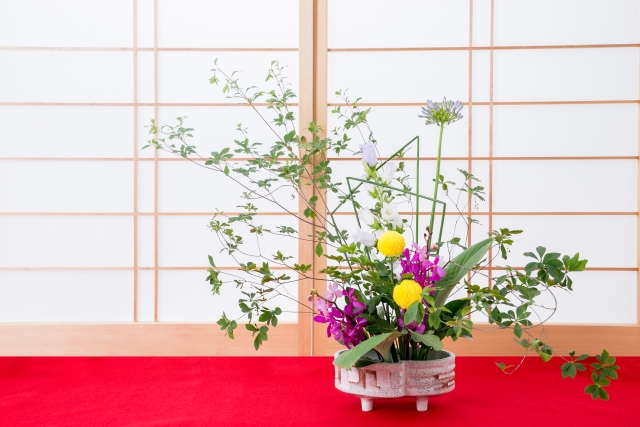
Rather than focusing solely on the flowers themselves, Ikebana considers the entire composition, including the container, the stems, the leaves, and most importantly, the empty space between elements. Each arrangement tells a story and reflects the seasons, the arranger’s emotions, and the natural environment.
The art form is often described as meditative. Practitioners spend time carefully selecting materials, contemplating their placement, and creating balance through intentional design. This process is considered a form of spiritual practice that cultivates mindfulness and appreciation for nature’s fleeting beauty.
The History and Origins of Ikebana
Ikebana originated in the 6th century when Buddhism was introduced to Japan from China and Korea. The practice of offering flowers to Buddha at temple altars evolved into a more refined art form over the centuries.
During the Muromachi period (1336-1573), Ikebana became formalized as a distinct art. The name Senkei Ikenobo first appeared in historic records in 1462 as a master flower arranger whose work was widely praised. Later, Ikenobo Sen’o (also known as Senno), active in the mid-16th century, established the philosophical foundation of Ikebana by completing a compilation of teachings called the Senno Kuden (Ikenobo Sen’o’s Oral Teachings). Sen’o is considered the figure who transformed flower arranging from decorative practice into a philosophical art form, teaching that “not only beautiful flowers but also buds and withered flowers have life, and each has its own beauty.”
In the Edo period (1603-1868), Ikebana spread beyond the aristocracy and samurai to become popular among merchants and common people. Different schools emerged, each developing unique styles and philosophies. The art continued to evolve through the modern era, with new schools introducing more contemporary and experimental approaches while maintaining core traditional principles.
Key Principles of Ikebana
Minimalism and Space (Ma)
One of the most distinctive features of Ikebana is its embrace of minimalism. Unlike Western arrangements that often aim for fullness and abundance, Ikebana uses fewer materials to create maximum impact.
The concept of “Ma” refers to the negative space or emptiness in an arrangement. This space is not considered empty but rather an active element that gives breathing room to the materials and allows viewers to appreciate each component fully. The balance between presence and absence is essential to the Ikebana aesthetic.
Asymmetry and Balance
Ikebana arrangements typically avoid perfect symmetry, instead seeking a dynamic balance through asymmetrical composition. This reflects the natural world, where perfect symmetry rarely exists.
The classical Ikebana structure often uses a triangular form representing heaven, earth, and humanity. The tallest element (Shin) symbolizes heaven, the medium element (Soe) represents humanity, and the shortest element symbolizes earth. This element is called Tai in the Ikenobo school and Hikae in schools like Sogetsu, reflecting terminology variations among different schools. This three-point structure creates visual interest while maintaining harmony.
Harmony with Nature and Seasons
Ikebana emphasizes seasonal awareness and the natural growth patterns of plants. Practitioners select materials that reflect the current season, celebrating the unique beauty of each time of year.
Arrangements honor the natural lines and forms of branches and stems rather than forcing them into unnatural shapes. A branch that curves gracefully or a stem that reaches upward is valued for its inherent character and used to enhance the overall composition.
Major Schools of Ikebana
| School | Founded | Characteristics |
|---|---|---|
| Ikenobo | 15th century | The oldest school; formal classical styles; emphasizes traditional forms like Rikka and Shoka |
| Ohara | 1897 | Introduced the Moribana style; uses shallow containers; incorporates Western influences |
| Sogetsu | 1927 | Most contemporary and experimental; encourages creative freedom; uses non-traditional materials |
Ikenobo School
Ikenobo is the oldest and most traditional school of Ikebana, with a history spanning over 500 years. The school maintains classical forms and emphasizes the spiritual and philosophical aspects of flower arranging, building upon the teachings established by Ikenobo Sen’o in the 16th century.
Ikenobo’s teachings focus on deeply understanding plant materials and their natural characteristics. Arrangements in this school tend to be more formal and structured, following established rules while allowing for individual expression within those parameters.
Ohara School
Founded by Ohara Unshin in the late 19th century, the Ohara school introduced the Moribana style, which uses shallow, wide containers. This innovation was partly inspired by Western flower arrangements that Ohara observed during Japan’s modernization period.
The Ohara school is known for creating more naturalistic landscapes within containers, often depicting scenes from nature such as waterside environments. This approach made Ikebana more accessible and adaptable to modern living spaces.
Sogetsu School
Established by Teshigahara Sofu in 1927, Sogetsu is the most avant-garde and contemporary school. The school’s motto, “Ikebana can be practiced by anyone, anywhere, with any material,” reflects its inclusive and experimental philosophy.
Sogetsu encourages artists to explore unconventional materials including metal, plastic, and glass, alongside traditional plant materials. In 2026, the school actively embraces modern technology and digital platforms, maintaining an official Instagram account with over 42,000 followers, YouTube channel, and presence on multiple social media platforms to share arrangements globally. The school established the Sogetsu Excellence Award in 2024, featuring winning entries on Instagram, demonstrating how traditional Ikebana schools are integrating digital engagement into their practices.
Ikebana vs Western Flower Arrangement: Key Differences
| Aspect | Ikebana | Western Flower Arrangement |
|---|---|---|
| Philosophy | Minimalism, spiritual practice, harmony with nature | Abundance, decoration, visual impact |
| Use of space | Negative space is essential; fewer materials | Fullness preferred; more materials used |
| Symmetry | Asymmetrical balance | Often symmetrical |
| Focus | Lines, structure, and empty space | Color, volume, and texture |
| Seasonality | Strong emphasis on seasonal materials | Less emphasis on seasons |
The fundamental difference lies in philosophy and intention. Western flower arrangements often prioritize creating visually striking displays with abundant flowers, focusing on color combinations and fullness.
Ikebana, by contrast, treats flower arranging as a meditative discipline and form of artistic expression. Every element is carefully considered, and the space between materials is as important as the materials themselves. The result is often more subtle and requires contemplative viewing to fully appreciate.
Additionally, Western arrangements typically focus on the flowers as the primary element, while Ikebana gives equal importance to stems, branches, leaves, and the container. The vessel is carefully chosen to complement and enhance the overall composition.
Basic Ikebana Styles
Rikka (Standing Flowers)
Rikka is the oldest and most formal style of Ikebana, dating back to the 15th century. These arrangements are typically large and complex, often standing several feet tall.
Rikka compositions represent natural landscapes and include seven or nine principal branches arranged to depict mountains, waterfalls, and valleys. This style requires advanced technical skill and deep knowledge of traditional forms. Today, Rikka is primarily practiced for ceremonial occasions and formal exhibitions.
Shoka (Living Flowers)
Shoka emerged in the 18th century as a simpler, more refined alternative to Rikka. These arrangements use three main elements representing heaven, earth, and humanity, emphasizing the natural beauty of plant materials.
Shoka arrangements typically focus on a single type of plant material or harmonious combination of two types. The style reveals the essential character of the plants while maintaining elegant simplicity. Shoka is considered excellent for learning fundamental Ikebana principles.
Nageire (Thrown-in Style)
Nageire, meaning “thrown in,” appears more casual and spontaneous than other styles, though achieving this naturalistic look requires considerable skill. These arrangements are created in tall vases without the use of fixing devices like kenzan (flower frogs).
The materials seem to lean and rest naturally against the container edges, creating an impression of effortless beauty. Nageire is popular for tea ceremony settings and informal occasions, embodying the aesthetic of natural grace.
Moribana (Piled-up Flowers)
Introduced by the Ohara school in the late 19th century, Moribana uses shallow, wide containers and a kenzan to secure stems. This style allows for more landscape-oriented compositions.
Moribana can depict natural scenes such as gardens, meadows, or waterscapes. The style’s versatility and adaptability to modern interiors have made it one of the most popular forms for contemporary practitioners. Both upright and slanting variations exist, offering creative flexibility.
The Spiritual Aspect of Ikebana
Beyond its aesthetic appeal, Ikebana is deeply connected to Zen Buddhism and Japanese spiritual traditions. The practice is considered a form of meditation that cultivates mindfulness, patience, and appreciation for impermanence.
When creating an arrangement, practitioners enter a state of focused attention, carefully observing each material and contemplating its placement. This process quiets the mind and creates a sense of harmony between the arranger and nature. The act of cutting, arranging, and appreciating flowers becomes a way to connect with the present moment.
The concept of “mono no aware,” or the pathos of things, is central to Ikebana philosophy. This aesthetic principle recognizes the transient beauty of natural materials. Flowers will wilt, leaves will fall, and arrangements will fade—this impermanence is not lamented but celebrated as part of nature’s cycle.
Through regular practice, Ikebana practitioners develop not only artistic skills but also personal qualities such as discipline, respect, and humility. Many describe the art as a lifelong journey of learning and self-discovery rather than merely a hobby.
Where to Experience Ikebana in Japan
For those interested in experiencing Ikebana firsthand, several locations in Japan offer classes, demonstrations, and exhibitions:
Ikenobo Ikebana Museum in Kyoto is operated by the oldest Ikebana school and features regular exhibitions showcasing traditional and contemporary works. The museum also houses historical materials documenting the evolution of Ikebana.
Sogetsu Kaikan in Tokyo serves as the headquarters of the Sogetsu school. The building itself, designed by renowned architect Tange Kenzo, is an architectural landmark. Visitors can view exhibitions and participate in workshops.
Ohara School of Ikebana in Tokyo offers classes for international visitors and regular demonstrations. The school provides English-language instruction for beginners interested in learning Moribana and other Ohara styles.
Many temples and cultural centers throughout Japan offer seasonal Ikebana exhibitions, particularly during spring and autumn when materials are most abundant. These displays often coincide with traditional festivals and celebrations.
Summary
Ikebana is a profound Japanese art form that transcends simple flower arrangement. Through its emphasis on minimalism, asymmetry, and harmony with nature, Ikebana offers a unique aesthetic philosophy that differs significantly from Western approaches.
Rooted in Buddhist traditions and refined over centuries, Ikebana encompasses various schools and styles, from the formal Rikka to the contemporary Sogetsu approach. Each style maintains core principles while offering distinct interpretations of beauty and expression. In 2026, traditional schools continue evolving by embracing digital platforms and social media to share their art globally while preserving their philosophical foundations.
More than creating visual beauty, Ikebana serves as a spiritual practice and meditative discipline. It teaches practitioners to observe nature carefully, appreciate transient beauty, and find harmony through mindful creation.
For those interested in Japanese culture and aesthetics, exploring Ikebana provides valuable insights into the Japanese way of perceiving and interacting with the natural world—a perspective that values simplicity, seasonality, and the profound beauty found in carefully considered restraint.